
Key aspects not to overlook in warehouse design
The most critical mistake that can be made in the design phase of a new logistics hub is to consider racking as a simple commodity, a passive furnishing element, or merely an accessory of the warehouse. On the contrary, racking represents the true backbone of the entire infrastructure—the supporting structure that must bear tons of load while ensuring the safety of people and the efficiency of operational processes. An excellent project cannot ignore an integrated vision in which every metal component meets strict and regulated technical criteria, where safety and long-term durability become the only true indicators for evaluating the quality of the investment.
The vital importance of load capacity and tachnical precision
A safe warehouse begins above all with a full understanding of technical specifications and applicable regulations. Proper design means accurately calculating the maximum load capacity of the structures—namely, the maximum weight that each individual level can support without compromising the integrity of the entire framework. This figure is not a generic indication, but an operational constraint that must be clearly communicated through load rating plates. These plates, which are mandatory and clearly visible, provide vital information such as the load capacity of the frames, the intended load unit, the year of manufacture, and the exact configuration of the levels—elements that must guide daily operations.
Stability as a priority: load distribution and center of gravity
The stability of a racking system largely depends on how the load is distributed within it. It is essential that the weight is spread evenly across the shelves to avoid dangerous asymmetries that could reduce the effective load capacity and compromise the structure’s integrity. In this regard, a golden rule of safe logistics is to always place the heaviest loads on the lower levels or directly at ground level, thereby improving the center of gravity and the overall stability of the system. The distance between levels also plays a crucial role: increasing the space between one shelf and another proportionally reduces the load capacity of the frame—a technical detail that requires precise structural verification during the design phase.
Maintenance and compliance: protecting the investment over time
To ensure that this “backbone” maintains its performance over time, maintenance must not be considered an option, but a regulatory and moral obligation. Periodic inspections carried out by qualified technicians, in compliance with UNI EN 15635 standards, are the only way to promptly identify any structural damage or overloads. Every company is required to appoint a person responsible for the safety of storage equipment (PRSES), tasked with continuously monitoring the condition of the structures and keeping the necessary documentation to demonstrate warehouse compliance to the relevant authorities.
Engineering Excellence: Armes’ Tailor-Made Solutions
Armes addresses these requirements by adhering to the most stringent national and European standards, such as UNI EN 16681 and UNI EN 15512, which regulate the design and installation of storage systems. Whether it involves high-density automated systems for space optimization, traditional pallet racking, cantilever systems for long loads, or gravity flow racking designed to move goods using slope, every Armes solution is the result of advanced structural assessments. Commitment to complying with occupational safety regulations and specific technical standards ensures that each installation is optimized for maximum functionality, withstanding the expected loads while never compromising operational safety.
The efficiency of a modern warehouse is therefore the result of a perfect balance between customized design and regulatory rigor. Relying on an experienced partner means transforming a set of metal profiles into a dynamic system capable of lasting for decades, ensuring that every investment translates into a safe working environment and a smooth logistics process. When conceived as the beating heart of the company, racking becomes the ultimate driver of growth and operational stability.
“The quality of a warehouse is directly proportional to the seriousness with which its load-bearing structure is treated. From our perspective, carefully designed racking is not merely an installation cost, but the silent guarantee of a company that operates efficiently. Investing in safety and in the precision of structural calculations means protecting the company’s future—quite literally supporting the logistical challenges of our clients for years to come”.
Otello Dalla Rosa, CEO of Armes, concludes.


 Redazione
Dynamic warehouse: what it is, how it works, and when it’s truly worth it
READ THE ARTICLE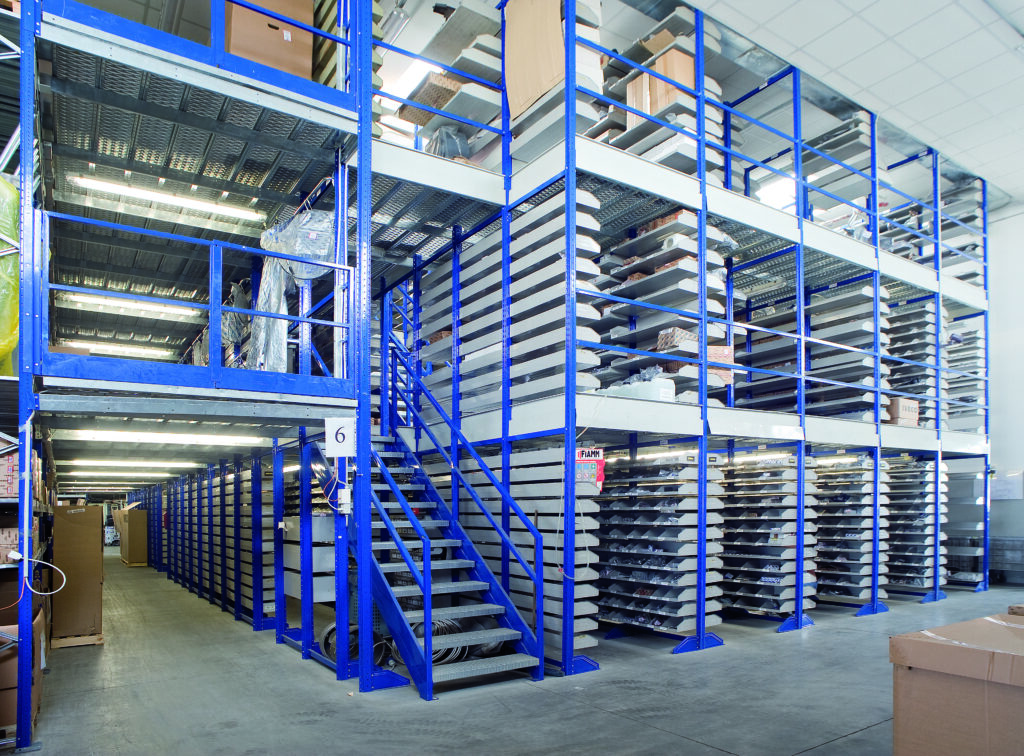 Redazione
Automated storage: what it is, how it works and when it really pays off
READ THE ARTICLE