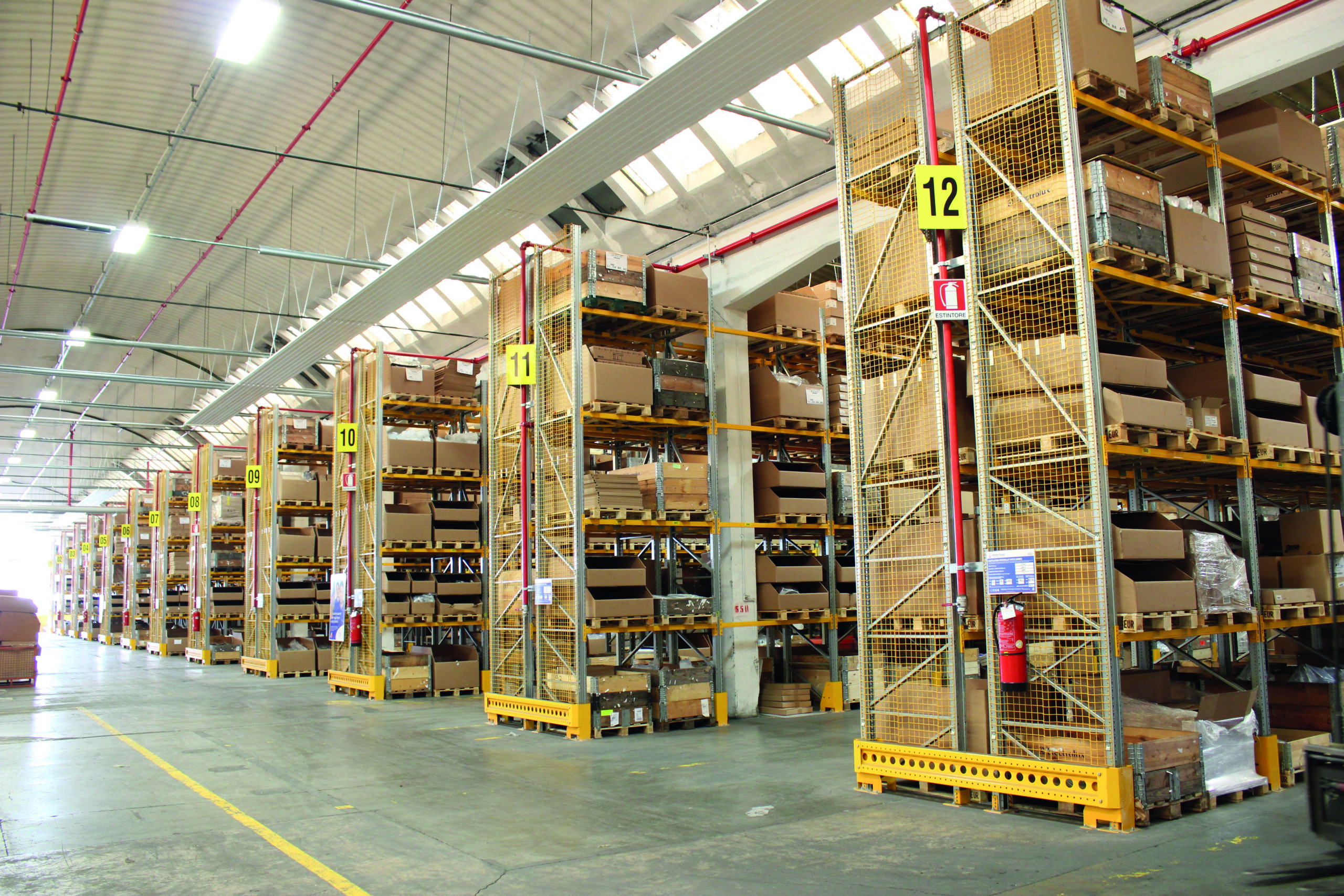

Racking risk assessment: what you need to know
When it comes to industrial warehouses and goods storage, safety is one of the most critical aspects to consider. Racking systems play a fundamental role in warehouse management, but if they are not properly maintained or do not comply with safety standards, they can become a hazard for employees and for operational efficiency.
In this article, we will explore the main aspects of racking risk assessment, what the regulations require, the key risks to monitor, and how to ensure a safe and efficient working environment.
Why is racking risk assessment important?
Every day, racking systems are subjected to stress caused by loads, the movement of goods, and daily warehouse operations. Proper racking risk assessment is essential to prevent accidents that could compromise not only employee safety, but also the integrity of the goods and overall warehouse efficiency.
In Italy, Legislative Decree 81/2008, which covers workplace safety, requires companies to ensure that racking systems are properly maintained and regularly assessed. In addition, the UNI EN 15635 standard provides specific guidelines for the management and maintenance of metal racking systems, stating that inspections must be carried out at least once a year by qualified personnel.
Main regulations: UNI EN 15635 and other guidelines
The UNI EN 15635:2009 standard is the primary reference for the management of metal racking systems. According to this standard, racking must be inspected regularly, with particular attention to visible damage, structural stability, and the overall condition of the storage system.
Maintenance obligations
Regulations require that, in the event of significant damage to racking systems, the company must take prompt action to restore safety conditions. Inspections must be carried out by qualified personnel, capable of objectively assessing risks and identifying any issues that need to be addressed.
Types of risks for racking systems
There are several types of risks that must be monitored during racking inspections.
The main ones are:
1. Structural damage
Racking systems can be damaged due to impacts, stress, and excessive loads. Structural damage can compromise the stability of the system and increase the risk of collapse.
2. Oerloading
Overloading is one of the most common causes of accidents. Racking must be loaded according to the manufacturer’s specifications, respecting capacity limits. Overloading can damage the structure and lead to collapse.
3. Material degradation
Over time, wear and tear, corrosion, and material aging can compromise the strength of racking systems. It is important to carry out periodic checks to identify signs of corrosion or structural damage caused by exposure to harsh environmental conditions.
4. Ergonomic risks
Racking systems must be designed to minimize ergonomic risks for operators. Racking that is too high or difficult to access can cause issues for personnel involved in picking and handling operations.
Risk assessment methodologies
Racking risk assessment should follow a well-defined process that includes the following steps:
1. Visual inspections
The first step consists of a visual inspection of the racking. It is necessary to check for visible damage, such as deformations, breakages, corrosion, or missing components.
2. Structural condition check
It is important to verify that the racking is stable and that there are no signs of failure or instability. The fixing of the racking to the floor and walls should also be examined.
3. Load control
Ensure that the racking is being used correctly according to the recommended load capacities. Continuous load monitoring helps prevent dangerous overloading.
4. Staff training
Employees must be trained on the risks associated with racking use and on the safety procedures to follow. Proper training helps prevent human errors and reduces operational risks.
Maintenance and periodic inspections according to UNI EN 15635
The UNI EN 15635:2009 standard, which governs maintenance and periodic inspections, regulates the management and safety of industrial racking systems.
According to the guidelines, racking systems must be inspected at least once a year by a qualified professional. Depending on the frequency of use and the type of warehouse, inspections may need to be carried out more frequently, especially in high-turnover environments.
During the inspection, the expert must check:
- Structural stability: verification of uprights, beams, and joints to prevent failures or structural damage that could compromise safety.
- Compliance with regulations: ensuring that racking systems meet the safety standards set out in UNI EN 15635, including load capacity and structural design requirements.
- Damage assessment: examination of any signs of wear, impact damage, or deformation that could affect the strength of the racking.
If significant damage or non-compliance is identified, it is necessary to take prompt action to ensure operational safety.
Conclusion: safety first
Racking risk assessment is essential to ensure a safe, productive, and compliant working environment. Proper safety management for racking systems not only prevents accidents, but also improves warehouse efficiency.
Relying on professionals such as Armes, which offers tailored solutions for industrial racking systems, allows you to enhance safety and efficiency while reducing the risk of damage to equipment and goods.


 Redazione
Dynamic warehouse: what it is, how it works, and when it’s truly worth it
READ THE ARTICLE Redazione
Automated storage: what it is, how it works and when it really pays off
READ THE ARTICLE